Research
Archives
From thought to publication.
Our role
Tuzafrika is a young institute: we do not yet hold an archive of our own. In the meantime, this section gathers the primary texts and reports — agreements, resolutions, official inquiries — that our work on the Great Lakes draws on, each linking directly to its source. It will grow, as our research advances, with documents and testimonies gathered directly by the Institute.
Founding texts
Borders and sovereignty
-
1885
General Act of the Berlin Conference (26 February 1885), which set the rules for the colonial partition of Africa and founded the Congo Free State — the matrix of the region's current borders.
Peace agreements
Ending the wars
-
1999
Lusaka Ceasefire Agreement, an attempt to end the Second Congo War and pave the way for the deployment of MONUC.
-
2000
Arusha Peace and Reconciliation Agreement for Burundi, which set the framework for power-sharing and the end of the Burundian civil war.
-
2013
Peace, Security and Cooperation Framework for the DRC and the Region, signed in Addis Ababa under the aegis of the African Union and the United Nations.
Inquiries and resolutions
Establishing the facts
-
1999
Human Rights Watch, Leave None to Tell the Story (Alison Des Forges) — the reference investigation into the genocide of the Tutsi in Rwanda.
-
2010
Mapping Report of the UN Office of the High Commissioner for Human Rights, documenting the most serious violations committed in the DRC between 1993 and 2003.
-
2013
United Nations Security Council Resolution 2098, which established the Force Intervention Brigade within the UN mission in the DRC.
-
Ongoing
Successive reports of the UN Group of Experts on the DRC (Sanctions Committee 1533), published twice a year.
Rwanda
From civil war to reconstruction
-
1993
Arusha Peace Agreement between the Rwandan government and the Rwandese Patriotic Front (4 August 1993) — the power-sharing agreement whose collapse directly preceded the 1994 genocide. Not to be confused with the Arusha Accords for Burundi (2000), cited above.
-
1994
United Nations Security Council Resolution 955, establishing the International Criminal Tribunal for Rwanda (ICTR) to prosecute those responsible for the genocide.
-
2003
Constitution of the Republic of Rwanda, adopted by referendum in 2003 (since amended) — the institutional framework of the post-genocide period.
Heads of state
Presidents who died in office or after
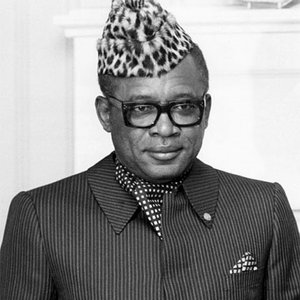
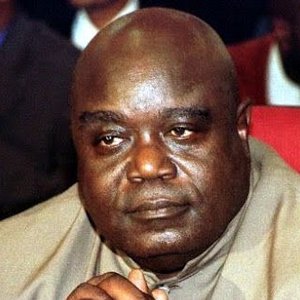
Part of the political history of the three countries reads in the fate of their heads of state: assassinations, deaths in detention or exile, but also natural deaths. This timeline helps situate the institutional ruptures discussed in our analyses.
DRC (Congo)
-
17 Jan. 1961
-
24 Mar. 1969
-
7 Sep. 1997
-
16–18 Jan. 2001

.jpg?width=160)
Rwanda
-
15 Dec. 1976
-
6 April 1994
.jpg?width=160)
.jpg?width=160)
Burundi
-
16 Jul. 1983
-
21 Oct. 1993
-
6 April 1994
-
4 May 2016
-
8 June 2020
-
17 Dec. 2020
.png?width=160)
.png?width=160)


Every document cited links to its official source. This list will grow as the Institute's work progresses.
Stay informed
To be notified as soon as new documents are published, check out our existing publications or get in touch.